
𝗖𝗼-𝗖𝗿𝗲𝗮𝘁𝗶𝗻𝗴 𝗚𝗹𝗼𝗰𝗮𝗹𝗶𝘇𝗮𝘁𝗶𝗼𝗻: 𝗗𝗲𝘀𝗶𝗴𝗻𝗶𝗻𝗴 𝗮 𝗻𝗲𝘁𝘄𝗼𝗿𝗸 𝗳𝗼𝗿 𝗹𝗼𝗰𝗮𝗹 𝗶𝗺𝗽𝗮𝗰𝘁
In 2025, Aiducation took a decisive step forward in its mission to create lasting educational impact. Building on 20 years of delivering high-quality programs across multiple countries, we set out on a journey of Glocalization: a strategic transformation that brings together the strength of a global network with the insight, ownership and agility of local leadership.
It starts with a simple belief
At its core, Glocalization is grounded in an idea that is simple but powerful: the people closest to the communities we serve are best placed to drive meaningful and sustainable change.
By enabling local teams to design, implement and scale programs within their own contexts, Aiducation is strengthening a model that is both globally connected and locally rooted. This makes our work more relevant and responsive to local needs. It also creates a more scalable and resilient network, one that can reach more talented students while staying deeply aligned with their communities.
Co-created, not handed down
Glocalization isn’t something being designed for our country teams. It’s being designed with them. Under the guidance of Kathrin Dick and with the support of Matthias Meier, it has grown into a collaborative, co-creation process in which teams across countries are actively shaping shared frameworks, processes and ways of working. The aim is a network that reflects both global cohesion and local empowerment.
Outside expertise is helping to make sure the approach is both grounded and scalable. Sonja Betschart, Co-Founder of WeRobotics and Co-Pilot of the Flying Labs Network, is supporting the design of the Glocalization framework, bringing deep experience in building locally led, globally connected networks.
“Creating meaningful and lasting impact means that solutions need to answer local needs and be adapted to local contexts. At the same time, challenges and needs are often similar from one country to another.”
Sonja Betschart, Co-Founder, WeRobotics
A network designed for local ownership
Glocalization is no longer just a concept. It is becoming Aiducation’s new operating model. We are transitioning from a centrally coordinated structure to a Social Impact Franchise Network: a system designed to distribute ownership, strengthen local leadership and enable sustainable growth across countries.
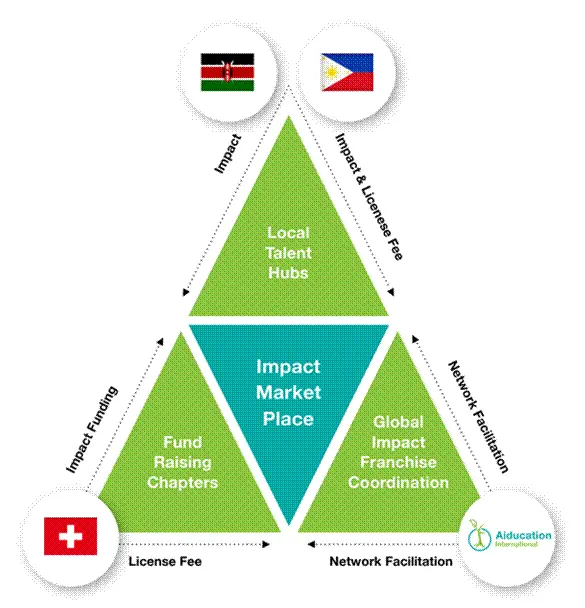
A schematic overview of the Glocalization Model for Aiducation International.
Three elements, one system
At the heart of this model are three interconnected elements.
1. Local Talent Hubs
Local Talent Hubs are the core of program delivery: mentoring scholars, implementing initiatives and adapting programs to local realities. With decision-making authority closer to the communities they serve, these hubs are better positioned to respond quickly, innovate effectively and create context-relevant impact.
2. Aiducation Fundraising Chapters
Fundraising Chapters mobilize resources within their regions, build partnerships and engage local donor communities. By anchoring fundraising locally, they strengthen both financial sustainability and community ownership of the mission.
Aiducation International (Umbrella Network)
Acting as the network enabler, Aiducation International provides strategic direction, shared standards and platforms for cross-country learning. Rather than centralizing control, it ensures alignment while empowering local teams to lead, experiment and grow.
Together, these elements form a dynamic system, one where local ownership and global connection reinforce each other.
From design to implementation
Throughout 2025, Aiducation made significant progress in bringing this model to life. Global kickoff workshops convened teams from multiple countries to align on a shared vision and begin co-creating the foundations of the network.
Since then, operational frameworks and guidance materials have been developed to support both Local Talent Hubs and Fundraising Chapters, giving clarity on how the model translates into day-to-day work. Roles and responsibilities between international and local teams have been further defined, and local leadership has already begun to take a more active role in program design and fundraising. Together, these shifts signal a clear move toward a more locally driven, globally connected organization.
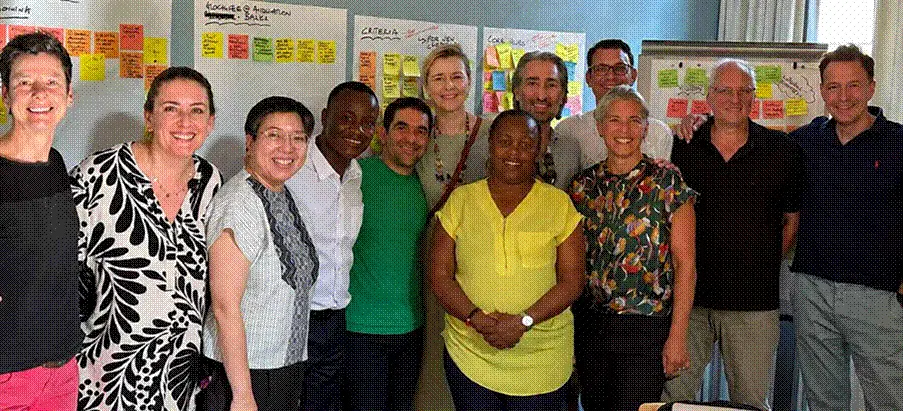
The Glocalization kickoff brought together Board members and country teams to align on the vision, share insights, and co-create the framework for a locally empowered network.
In their words: voices from our country teams
The Philippines
“For us in Pathways, glocalization is both a form of validation and an opportunity. Glocalization allows us to stay deeply rooted in our local mission, while expanding our reach, learning, and impact through global collaboration.”
Solvie Nubla-Lee, Country Director (The Philippines), Pathways to Higher Education
Kenya
“Glocalize positions us for global impact while acknowledging our local context which allows us to co-create impact that is customized to our local needs and hence more relatable. When solutions are led locally, it promotes local culture, ensures continuity and replicability, and enhances ownership.”
Harriet Were, Country Director, Aiducation Kenya
Looking ahead
The journey of Glocalization is only beginning. Aiducation will continue to expand its network of local hubs, deepen cross-country learning and further refine the systems that enable locally led impact at scale.
As the model takes shape, our focus remains clear: to place ownership in the hands of those closest to the communities we serve, while strengthening the global connections that make shared learning and growth possible.
In doing so, Aiducation is not only evolving how it operates. It is building a network designed to adapt, endure and reach even more talented students in the years ahead.
Published by Boniface Mahulo